GLOBAL-CAPABILITY-05 · ELECTRICAL MAINTENANCE
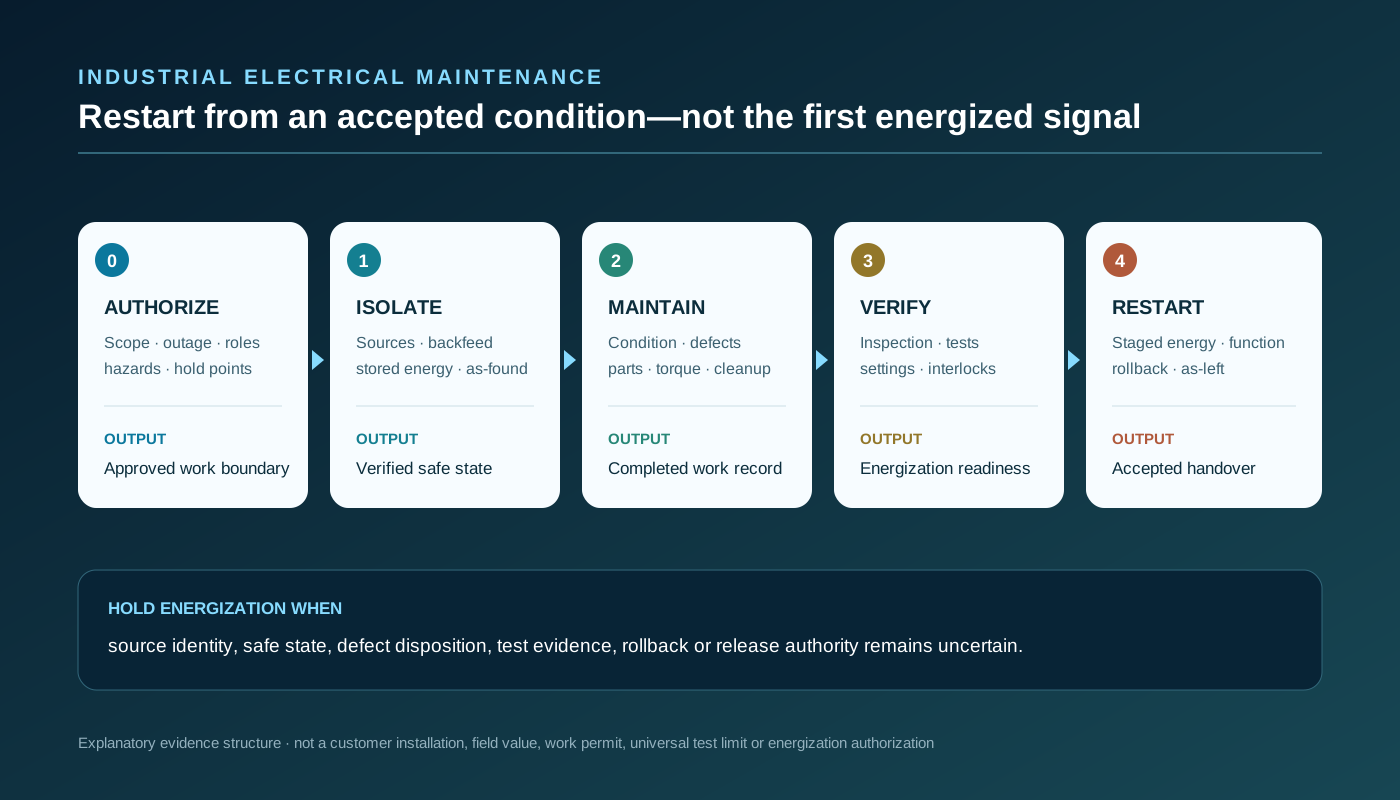
Restart from an accepted condition—not the first energized signal.
For overseas owners, OEMs and maintenance teams coordinating work in Korea, completion must connect the authorized outage, every energy source, as-found condition, defect disposition, tests, protection and control states, staged energization, rollback and accountable as-left handover.
SYSTEM BOUNDARY
Six workstreams that must close before operational release
Asset, source and authority
Site, lineup, panel, circuit, load, normal and alternate sources, drawings, labels, operating mode, outage owner and release authority.
Hazardous-energy boundary
Electrical, mechanical, hydraulic, pneumatic, chemical and thermal energy, backfeed, stored energy, automatic start, locks, tags and zero-energy verification.
As-found and maintenance evidence
Visual condition, contamination, overheating, looseness, corrosion, environment, actual defect, removed part, replacement identity, torque and cleanup.
Inspection and tests
Applicable procedure, test boundary, calibrated instrument, expected result, actual result, limitation, discrepancy, reviewer and retest.
Protection and control state
Settings, CT and VT paths, trip chain, interlocks, emergency functions, control power, PLC or SCADA state, alarms, bypasses and restoration.
Staged restart and as-left
Tools and grounds removed, personnel clear, sequence, hold points, expected response, rollback, residual restrictions, drawings, signatures and ownership.
EVIDENCE GATES
Maintenance complete is not the same as safe to energize.
| Gate | Question to close | Minimum evidence | Named output |
|---|---|---|---|
| 0 · Authorized work | What exact system, outage, hazards and responsibilities are approved? | Asset and source list, drawings, work scope, permits, risk review, operating impact, hold points, rollback and responsibility matrix | Approved work and outage boundary |
| 1 · Isolated as-found | Are every source, backfeed, stored energy and automatic action controlled and verified? | Isolation points, locks and tags, zero-energy test, independent sources, affected personnel, as-found photos and condition record | Verified safe state and baseline |
| 2 · Maintenance complete | What was found, changed, cleaned, tightened, replaced or left open? | Defect and part identity, approved method, actual work, torque or setting source, foreign-material check, open items and accountable disposition | Completed work and discrepancy record |
| 3 · Verification ready | Do inspections and tests support one bounded energization state? | Test plan, instrument and condition, expected and actual results, protection and interlock proof, settings, temporary devices removed and reviewer | Energization-readiness record |
| 4 · Staged restart | Does the system respond correctly and what proves accepted as-left operation? | Clearance, sequence, voltage and phase identity, abnormal response, alarms and trips, functional load, rollback, final drawings, restrictions and signatures | Accepted restart and as-left package |
STOP CONDITIONS
Hold energization whenever the release evidence is incomplete.
Drawings, labels, field circuits, alternate sources, backfeed paths or affected loads do not agree.
Stored energy, induced voltage, automatic start, remote command or zero-energy verification remains uncertain.
Damage, contamination, overheating, loose parts, foreign material, temporary wiring or an open item lacks disposition.
Method, instrument status, test condition, expected result, actual result or responsible reviewer is missing.
Settings, trip path, interlock, emergency function, bypass, alarm or control-power restoration is not reconciled.
Personnel clearance, staged sequence, hold point, rollback, restriction owner or final operating authority is unnamed.
PREPARE THE BOUNDARY
Start with a five-part maintenance and restart brief
- 01Identify the system and sources.
Site, asset, lineup, circuit, load, alternate supply, drawings, labels, protection, controls and operating impact.
- 02Name the authorities.
Owner, operating authority, safety lead, qualified workers, OEM, test lead, production and final release roles.
- 03Define work and energy states.
Normal, shutdown, isolated, tested, temporary supply, staged energization, functional load, hold and rollback states.
- 04Define evidence and criteria.
As-found records, test methods, instruments, conditions, approved values, expected response, stop condition and reviewer.
- 05Name the final package.
As-left state, results, parts, settings, drawings, restrictions, alarms, training, spares, signatures and follow-up ownership.
Confirm the country, AHJ, site procedures, permits, equipment ratings, arc-flash and shock assessment, qualified persons, OEM instructions, current standards and responsible engineer before isolation, testing, energized work, re-energization or operational release.
OFFICIAL PRIMARY SOURCES
Apply each source within its jurisdiction and equipment scope.
- NFPA 70B:2026 — U.S. standard for electrical equipment maintenance
- IEC 60364-6:2016 — initial and periodic verification of low-voltage electrical installations
- IEC 60204-1:2016+AMD1:2021 — electrical equipment of machines
- OSHA 29 CFR 1910.147 — U.S. control of hazardous energy during servicing and maintenance
- OSHA 29 CFR 1910.333 — U.S. de-energization, verification and re-energization work practices
NFPA and OSHA describe United States maintenance and workplace requirements; IEC publications provide international installation and machine-equipment frameworks. They do not create one universal interval, torque, insulation value, trip threshold or restart criterion. Confirm the adopted edition, country, AHJ, site program, equipment class, OEM data and responsible qualified persons.
RELATED FIELD RESOURCES