GLOBAL-CAPABILITY-04 · PHARMA & BIOPHARMA
Connect evidence that can support a batch decision—not another equipment RUN status.
This scope helps overseas owners, OEMs and suppliers coordinate with Korean production, quality, facilities, electrical, automation and CSV teams. It keeps product and batch identity, controlled utilities, process equipment, computerised records and final quality authority on one traceable timeline.
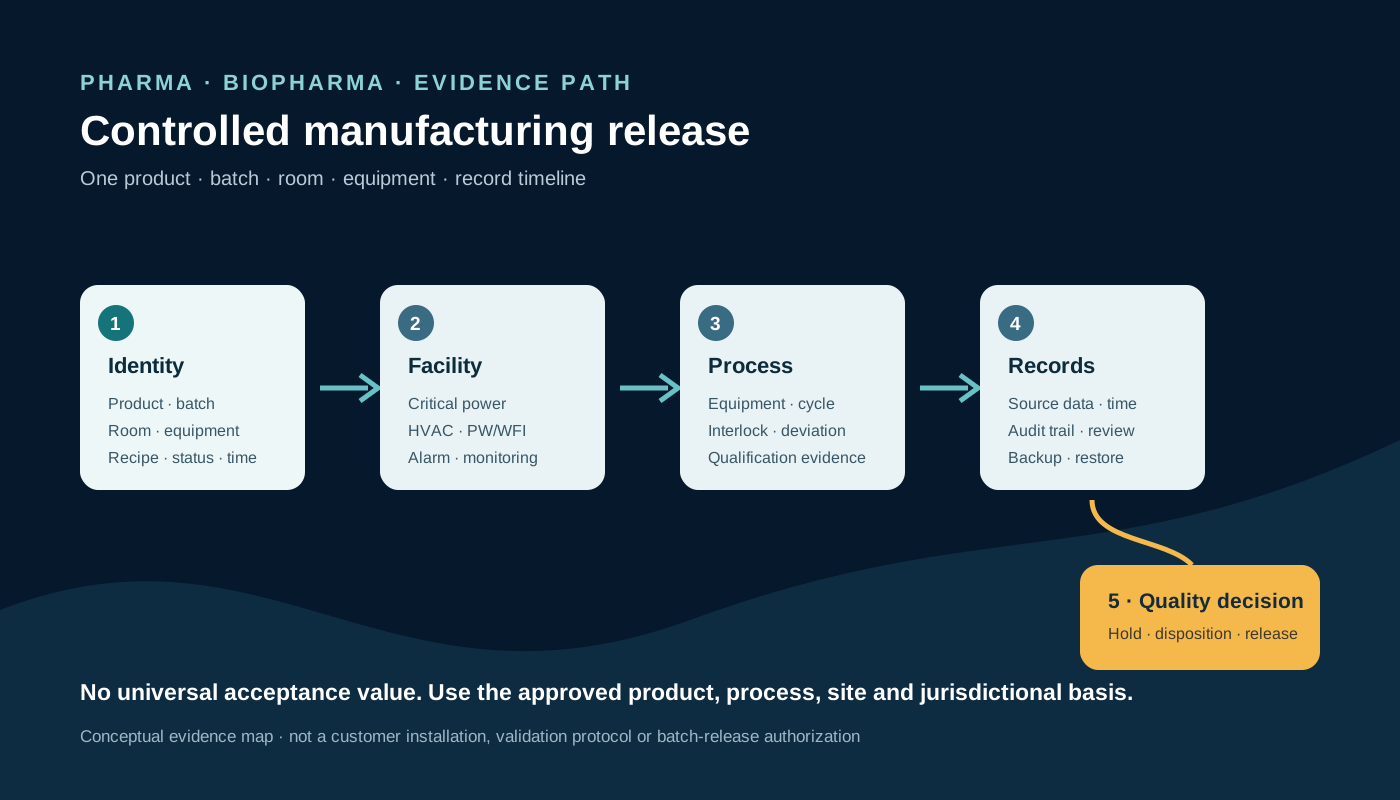
SYSTEM BOUNDARY
Six workstreams connected by one product, batch, asset and record timeline
Product, batch and process step
Identify the site, building, room, line, equipment, product, material, batch, recipe, version, quality status and named authority.
Power, HVAC and pharmaceutical water
Relate critical power, UPS, generators, cleanroom pressure, temperature, humidity, PW/WFI, alarms and dependent services.
Equipment, cycles and interlocks
Reconcile the equipment train, load, cycle, sensors, final elements, interlocks, alarms, deviations and qualification state.
PLC, SCADA and MES records
Trace source data, users, roles, time, audit trails, interfaces, electronic records, backup, restore and review.
Environmental and product impact
Separate monitoring, samples, trends, excursions, deviations, investigation, product impact and batch disposition.
Change, rollback and as-left state
Record approved requirements, change control, test evidence, restrictions, open items, rollback and follow-up ownership.
CONTROLLED EVIDENCE
Utility recovery, cycle completion or one passing sample does not close the manufacturing decision.
| Gate | Question to close | Minimum evidence | Named output |
|---|---|---|---|
| 0 · Identity | Do product, batch, area, asset, recipe, version and status match? | Approved records, asset and room IDs, batch and material, recipe, incident window, time quality, owners | Operating identity record |
| 1 · Facility | Are power, environment and utilities stable for this process state? | Source/load, UPS/generator, HVAC trend, pressure, PW/WFI identity, alarms, dependent services | Facility service boundary |
| 2 · Process | Was process equipment behavior demonstrated in the approved configuration? | As-found state, configuration, sensors and final elements, cycle record, failure response, qualification, deviations | Controlled process evidence |
| 3 · Records | Are the records supporting the decision complete and traceable? | Source data, time, user/role, audit trail, interface reconciliation, backup/restore and review | Reviewed record package |
| 4 · Quality | Who owns batch hold, disposition, release and accepted as-left state? | Impact assessment, investigation, product results, restrictions, rollback, quality approval and handover | Named disposition and handover |
STOP CONDITIONS
Hold when the product, batch, asset or record chain cannot be reconciled.
Energy, steam, pressure, chemical or biological hazards, clean-area controls or permits are not controlled.
Product, batch, room, equipment, recipe, version or event time does not match the approved record.
A bypass, forced I/O, muted alarm, shared account or temporary recipe, power or network state is not authorized and traceable.
Source data, audit trail, time, sample chain or before-and-after event evidence is missing or at risk of overwrite.
Expected behavior, failure and recovery tests, approved acceptance basis, deviations or rollback evidence are absent.
No named authority owns batch hold, product impact, disposition, release or accepted as-left state.
PREPARE THE BOUNDARY
Start with a five-part manufacturing evidence brief
- 01Fix the operating identity.
Name the product, material, batch, process step, room, equipment, utility, record system, recipe, version and event window.
- 02Separate jurisdiction and approval basis.
Identify country, site quality system, marketing authorization, pharmacopeial basis, approved SOP, validation state, permits and authorities.
- 03Name source evidence and time quality.
Specify sensors, samples, alarms, events, audit trails, batch records, calibration, backup and the common timestamp basis.
- 04Approve stop, test and rollback conditions.
Define safe state, hold, limited test, expected response, deviation, escalation, rollback and restart sequence.
- 05Name the quality result and as-left owner.
Record impact, investigation, disposition, restrictions, final configuration, open items, signatures and follow-up ownership.
Before work, confirm the applicable country, AHJ, site quality system, product authorization, process basis, competent-person and permit requirements, OEM procedures, approved protocols and quality-unit authority.
OFFICIAL PRIMARY SOURCES
Apply each source within its jurisdiction and document scope.
- eCFR 21 CFR Part 211 — U.S. CGMP for finished pharmaceuticals
- FDA Process Validation — lifecycle principles for manufacturing processes
- FDA Data Integrity and Compliance With Drug CGMP
- European Commission EudraLex Volume 4 — EU GMP
- NIST SP 800-82 Rev.3 — Guide to Operational Technology Security
FDA and eCFR apply within the U.S. context, EU GMP within the European Union context, and NIST provides OT-security guidance. None supplies a universal site acceptance value or replaces Korean or other national requirements, the site quality system, approved product and process basis, permits, qualified personnel or responsible authority.
RELATED FIELD RESOURCES