GLOBAL-CAPABILITY-03 · SEMICONDUCTOR FAB
Recover the fab through controlled release gates—not a single READY signal.
For overseas owners, OEMs, tool suppliers, EPC and facility teams coordinating work in Korea, recovery evidence must connect area safety, electrical energy, cleanroom and utilities, tool and chamber state, carrier and wafer lot integrity, and accountable production release.
SYSTEM BOUNDARY
Six workstreams that must share one operating identity and timeline
Event, tool and lot identity
Fab, bay, tool, chamber, recipe, carrier, wafer lot, event window, time quality, affected process and named decision authorities.
Electrical and hazardous energy
Sources, transfer systems, UPS and generators, branches, protection, voltage events, isolation, backfeed, stored energy and automatic start.
Cleanroom and utilities
FFU, MAU, exhaust, pressure, temperature, humidity, particles, PCW, UPW, CDA, nitrogen, vacuum, abatement, gas and chemicals.
Tool safety and interlocks
Power and grounding, gas, liquid and vacuum points of connection, alarms, interlocks, emergency stop, chamber state and OEM safe-state requirements.
Automation and carrier identity
FMCS, BMS, host, MES, AMHS, OHT, stockers, FOUP, load ports and E84 handoff evidence aligned to a common clock.
Product and handover decision
Partial process state, test or dummy wafers, inspection, lot disposition, staged ramp, residual restrictions, rollback and accepted as-left ownership.
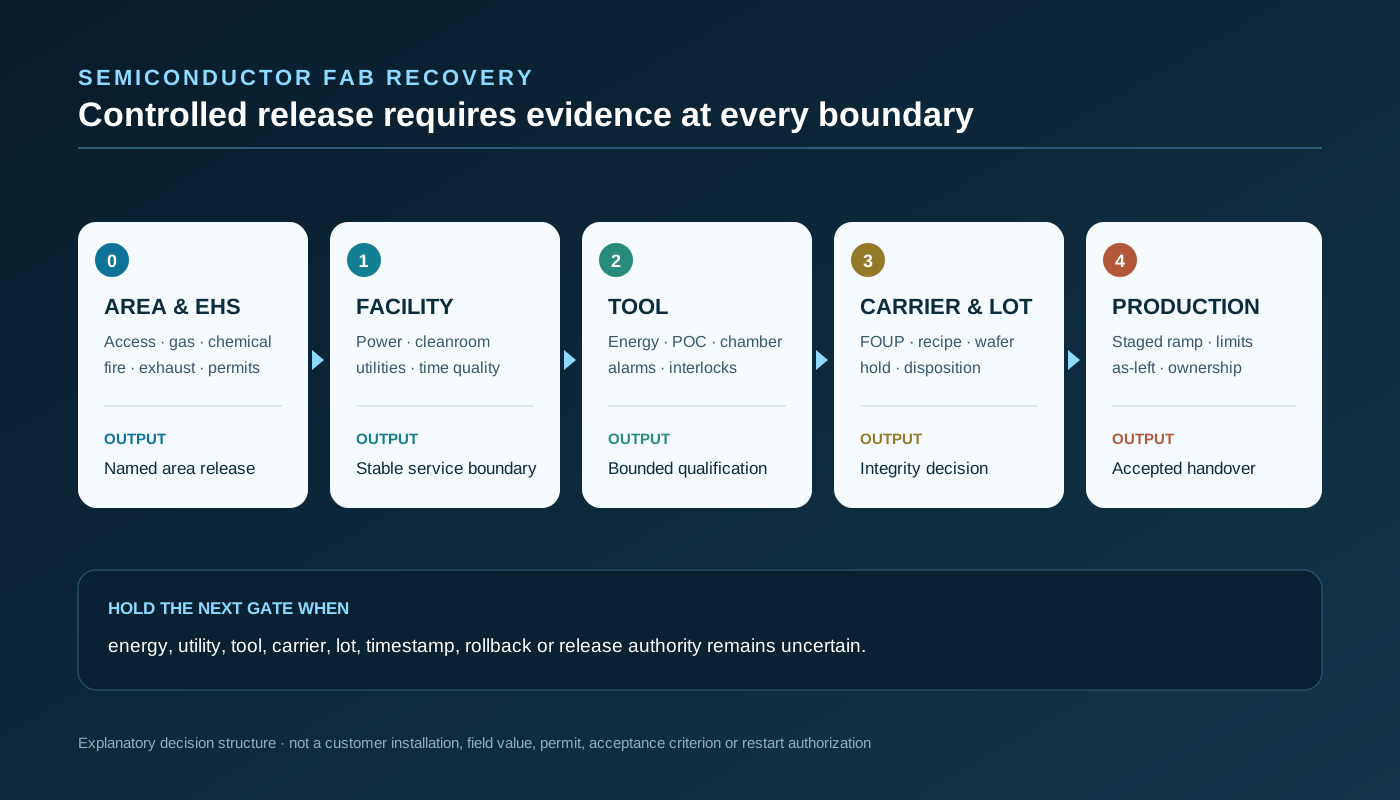
CONTROLLED RELEASE
A restored utility or a tool READY signal does not release production.
| Gate | Question to close | Minimum evidence | Named output |
|---|---|---|---|
| 0 · Area and EHS | Is access safe and has the responsible authority released the affected area? | Hazard inventory, gas and chemical state, exhaust and fire status, permits, isolation boundary, emergency response and access control | Named area and work release |
| 1 · Facility and cleanroom | Are electrical sources, cleanroom conditions and required utilities stable for this tool state? | Source and protection state, quality trends, pressure and environmental records, utility identity, dependencies, alarms and common timestamps | Stable facility-service boundary |
| 2 · Tool and chamber | Can the exact tool and chamber enter one bounded qualification state safely? | Energy verification, POC status, alarms and interlocks, OEM procedure, chamber and recipe state, controlled test, stop and rollback limits | Limited tool qualification record |
| 3 · Carrier and wafer lot | Are carrier, FOUP, wafer, recipe and process-history identities complete enough for disposition? | MES and host records, AMHS position, carrier and lot map, partial-process state, exposure assessment, inspection and named disposition authority | Carrier and lot integrity decision |
| 4 · Production and as-left | What proves staged release, operational limits and accountable handover? | Approved ramp plan, actual results, final states and backups, residual restrictions, open items, rollback, signatures and follow-up ownership | Accepted production and as-left package |
STOP CONDITIONS
Hold the next gate whenever the evidence cannot support it safely.
Fire, gas, chemical, exhaust, ventilation, access, permit or emergency response status is open.
Source, backfeed, stored energy, automatic start, remote command or affected personnel cannot be verified.
Utility identity, quality, temperature, pressure, environmental condition or dependent system is unclear.
Tool, chamber, recipe, carrier, wafer or lot state cannot be reconciled.
Timestamps cannot share a timeline or original logs, traces and records would be overwritten.
A bypass, manual mode, disabled alarm or open item is concealed, or rollback and release authority are unnamed.
PREPARE THE BOUNDARY
Start with a five-part recovery evidence brief
- 01Identify the system and material.
Fab, bay, tool, chamber, recipe, carrier, wafer lot, utilities, drawings, versions and event window.
- 02Name the authorities.
Owner, EHS, facility, OEM, equipment engineer, process, quality, production and final release roles.
- 03Define operating and test states.
Safe, isolated, utility-ready, chamber-ready, test wafer, hold, limited qualification, staged ramp and rollback.
- 04Define evidence and limits.
Original records, instruments, timestamps, applicable criteria, expected response, stop condition and responsible reviewer.
- 05Name the final package.
As-found and as-left states, results, logs, settings, restrictions, lot decision, rollback, signatures and follow-up.
Confirm the country, AHJ, site rules, current permits, qualified personnel, OEM instructions, equipment-specific criteria and responsible engineer before access, testing, energization, bypass, tool restart or production release.
OFFICIAL PRIMARY SOURCES
Apply each source only within its published scope and jurisdiction.
- SEMI S2-0724E — performance-based EHS considerations for semiconductor manufacturing equipment
- ISO 14644-4:2022 — cleanroom requirements, design, construction, start-up and verification framework
- NFPA 318:2025 — U.S. protection requirements for semiconductor fabrication facilities
- OSHA 29 CFR 1910.147 — U.S. control of hazardous energy during servicing and maintenance
- OSHA 29 CFR 1910.333 — U.S. electrical work practices, de-energization and re-energization
SEMI and ISO publications provide equipment and controlled-environment frameworks. NFPA and OSHA describe United States code and workplace requirements. Public abstracts do not supply project acceptance values. Confirm the current purchased edition, country, AHJ, site permit, process chemistry, equipment model, OEM criteria and qualified responsible personnel.
RELATED FIELD EVIDENCE