GLOBAL-CAPABILITY-01 · CONTROL PANEL RETROFIT
Plan the retrofit around evidence, not a parts list.
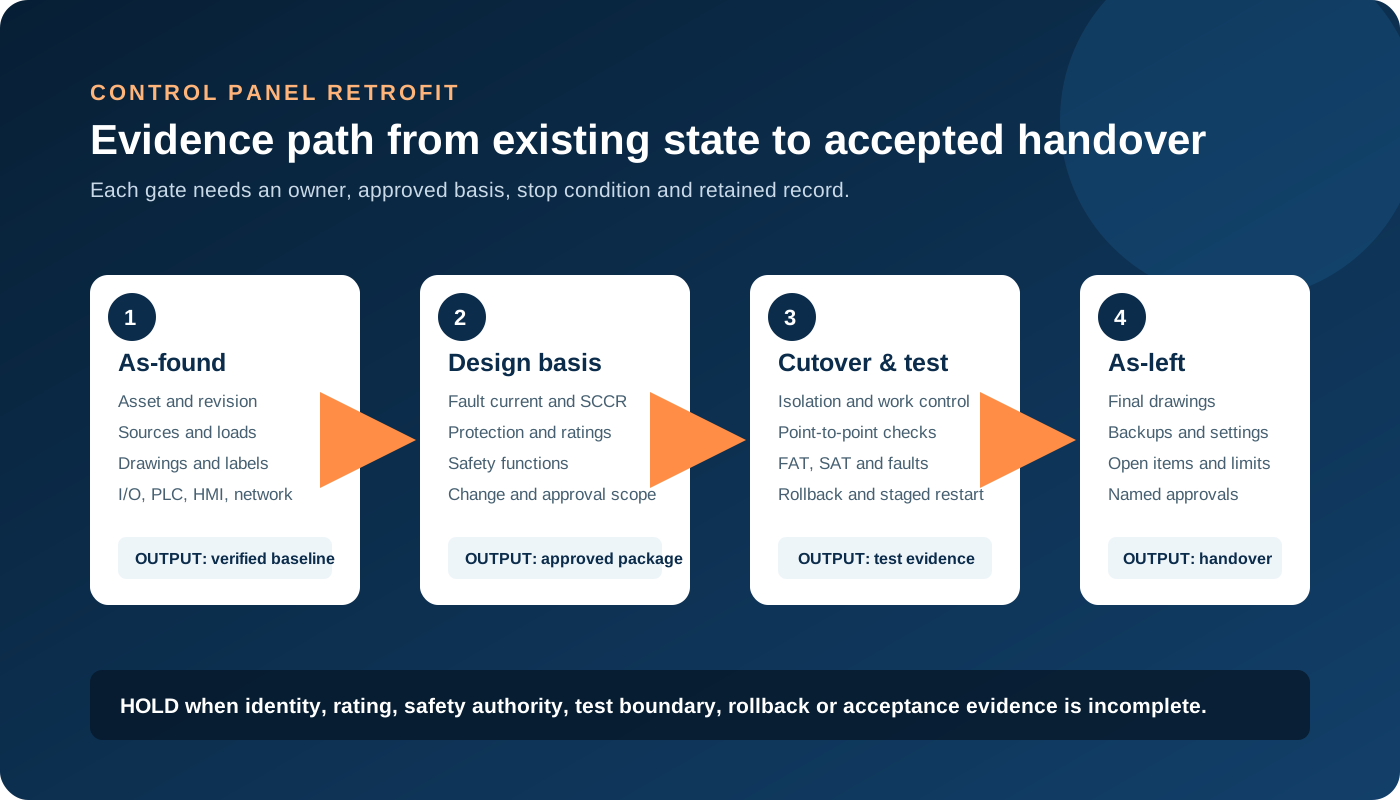
For overseas owners, OEMs and integrators coordinating work in Korea, the useful starting point is a verified existing state, an approved change boundary, controlled cutover tests and a traceable as-left package.
CAPABILITY BOUNDARY
Five workstreams that must stay connected
Existing-state survey
Panel identity, revisions, sources, actual loads, drawings, labels, environment, operating modes and undocumented field changes.
Ratings and protection
Incoming supply, available fault current basis, disconnects, protection, component and enclosure ratings, SCCR and jurisdictional review boundary.
I/O, PLC, HMI and OT
Point-to-point mapping, controller compatibility, source backups, versions, licenses, networks, accounts, remote access and local fallback.
Safety-function change
Risk-assessment inputs, safety input-logic-output chain, required performance, bypass control, validation scope and independent approval.
Commissioning and handover
Isolation, temporary interfaces, FAT, SAT, fault and restart scenarios, rollback triggers, open items, training and as-left records.
EVIDENCE PACKAGE
What the overseas and Korean teams should agree before work starts
| Decision | Evidence to prepare | Named output |
|---|---|---|
| What exists? | Panel and asset IDs, nameplates, photos, drawings and revisions, actual wiring, I/O, programs, settings, networks and current operating modes | Approved as-found baseline and discrepancy list |
| What may change? | Design narrative, power and protection basis, component compatibility, safety and OT impact, drawings, approval and certification boundaries | Approved change package and acceptance plan |
| How will it be cut over? | Shutdown window, isolation, temporary circuits, point-to-point checks, FAT/SAT, fault scenarios, rollback trigger, responsibility and communications | Cutover method, hold points and rollback record |
| What proves completion? | Test originals, calibrated tools, actual results, punch list, final programs and settings, drawings, labels, training, spares and operating restrictions | Accepted as-left handover package |
STOP CONDITIONS
Hold the retrofit when the evidence cannot support the next gate.
The physical panel, circuit, connected process or revision does not match the record.
Backfeed, stored energy, automatic start or affected personnel cannot be controlled.
Available fault current, SCCR, protection, enclosure or component suitability is unresolved.
Risk assessment, safety-function criteria, validation scope or qualified approval is incomplete.
A preserved baseline, compatible spare path, restoration time or accountable owner is missing.
Expected results, open-item limits, production authority or as-left records are not defined.
PREPARE THE BOUNDARY
Start with a short evidence brief
- 01Identify the system.
Site, line, panel, controlled equipment, process consequence, OEM, jurisdiction and current revision.
- 02State the problem and desired result.
Obsolescence, capacity, fault, compliance, safety or OT need—plus what must remain operational.
- 03Define the permitted work.
Inspection, design, fabrication, software, installation, live testing, shutdown, validation and release authority.
- 04Name the acceptance package.
Tests, formats, drawings, source files, settings, training, spares, open items and follow-up ownership.
Confirm current legal registration, relevant project evidence, named qualified personnel, insurance, site access, safety requirements and availability separately.
OFFICIAL PRIMARY SOURCES
Reference the correct jurisdiction and application boundary
- OSHA 29 CFR 1910.303 - equipment approval, installation, ratings, marking and work space
- OSHA 29 CFR 1910.333 - de-energizing, lockout/tagout, verification and qualified energized work
- UL Solutions - industrial control panel SCCR and combination motor controller components
- ISO 13849-1:2023 - safety-related parts of control systems
- NIST SP 800-82 Rev. 3 - OT performance, reliability, safety and security considerations
OSHA and UL references describe United States requirements or program scope. ISO adoption, local electrical rules, conformity assessment and competent-person requirements vary. Confirm the country, AHJ, site permit, OEM instructions, certification scope and responsible engineer before design or field work.
RELATED FIELD RESOURCES