EN-GUIDE-02 · CONTROL PANEL EVIDENCE
Control Panel Circuit Identity & Pre-Energization Verification
A label, drawing, open disconnect or dark indicator does not by itself prove circuit identity or an electrically safe condition. Map every source, reconcile the field circuit, verify with an approved method and release through final-state evidence.
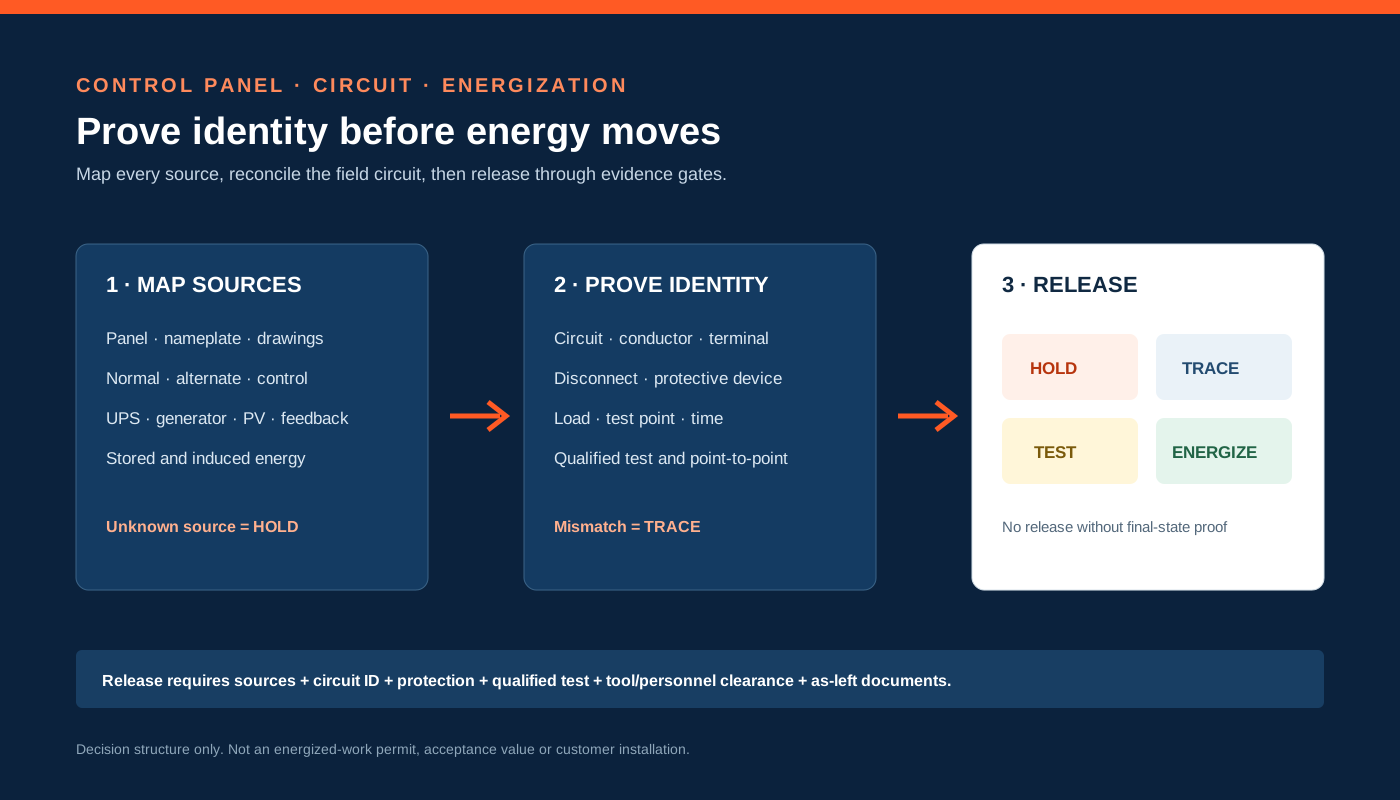
DECISION SUMMARY
Do not let a label or open handle substitute for a proven electrical boundary.
OBSERVABLE SYMPTOMS
Conditions that require circuit identity to be reopened
- A breaker or fuse label does not match the load that actually stops.
- An open main leaves control power, UPS, generator, PV, shared-neutral or feedback voltage present.
- The installed circuit differs from the latest available drawing or circuit schedule.
- A conductor has no durable identity at one or both termination points.
- A replaced protective device does not match the approved type, rating, setting or combination.
- Panel SCCR or another nameplate rating has not been compared with the installation condition.
STOP-WORK CONDITIONS
Hold when any source, identity, rating or safe-test condition is open.
A supply, backfeed path, stored energy or affected load cannot be identified.
Field wiring, circuit labels and approved drawings disagree on the affected boundary.
Panel, component, conductor or protective-device ratings cannot be verified.
The required qualification, work practice, PPE, instrument rating or permit is missing.
All exposed parts and possible feedback or induced sources cannot be covered.
Tools, jumpers, grounds, interlocks, personnel clearance, stop or rollback are not accounted for.
DATA TO COLLECT
Build a circuit record that links the nameplate to the actual load.
| Evidence group | Minimum record | Decision supported |
|---|---|---|
| Panel identity | Facility, line, panel ID, manufacturer, model, location and equipment served | Confirms the physical assembly under review. |
| Nameplate and rating | Rated voltage/current, SCCR, enclosure/type rating and certification marking | Frames the installation and fault-duty review. |
| Approved documents | Single-line, schematic, wiring diagram, circuit schedule and revision | Defines the intended circuit and authorized baseline. |
| Energy sources | Normal, alternate, control, UPS, generator, PV, regenerative, feedback, induced and stored energy | Prevents an incomplete isolation boundary. |
| Field identity | Feeder, branch, cable, conductor, terminal, disconnect and load IDs | Links each device and termination point-to-point. |
| Protection | Device manufacturer, type, frame/rating, setting and approved combination | Supports protection, coordination and SCCR review. |
| Test record | Instrument model/rating/check, test points, condition, time, result and qualified person | Shows what was actually verified and under which condition. |
| Work control | Permit, LOTO, stop limit, rollback, warning, personnel clearance and release authority | Connects evidence to authorization and final state. |
DECISION GATES
Close every open boundary before energization advances.
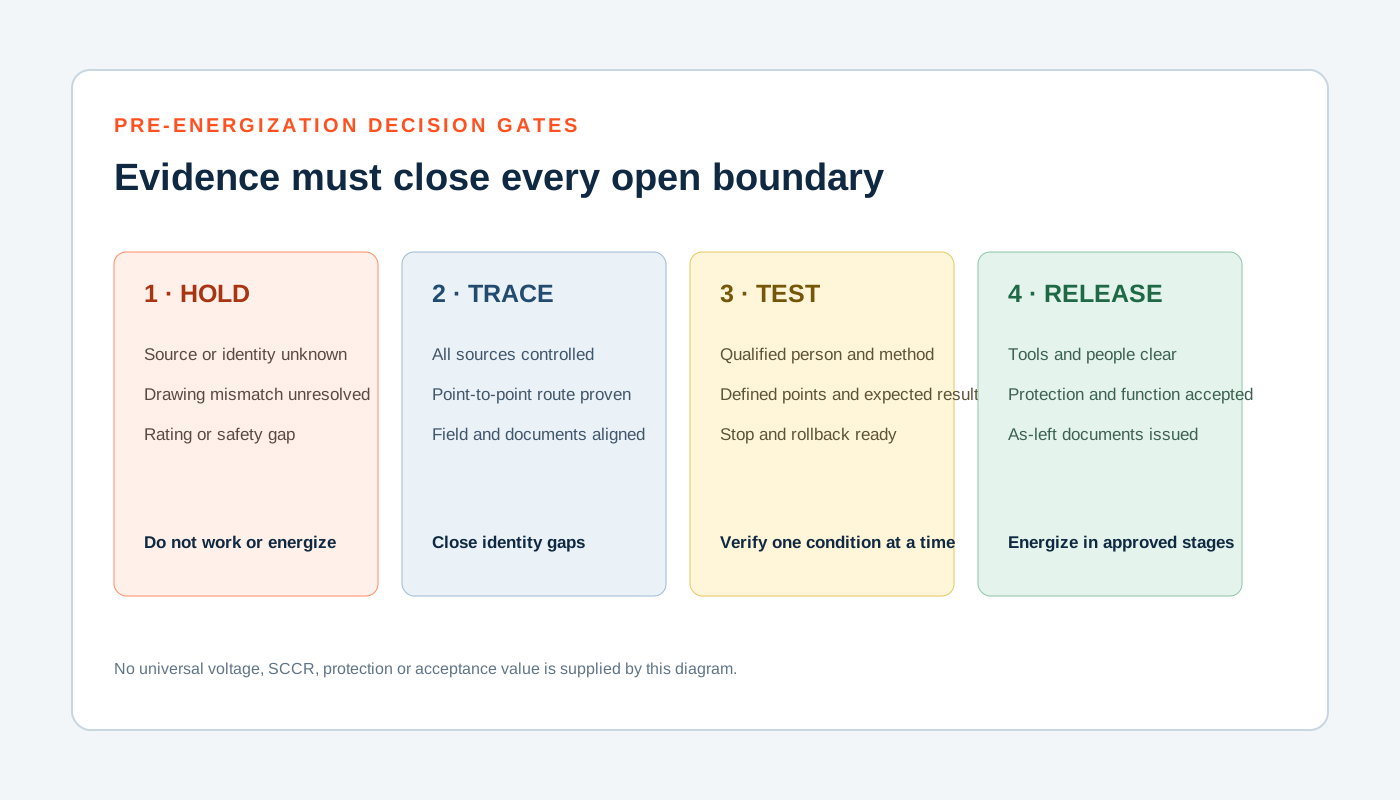
| Gate | Required evidence | Result |
|---|---|---|
| Hold | A source, identity, rating, drawing or safety boundary is unknown. | Do not work or energize. |
| Trace | Sources are controlled and a point-to-point route is available. | Reconcile the field circuit with documents. |
| Controlled test | Qualified person, suitable instrument, approved points, stop and rollback are defined. | Verify one condition at a time. |
| Release | Inspection, electrical and functional evidence, personnel clearance and as-left package are accepted. | Energize in the approved sequence and monitor. |
SIX-STEP PROCEDURE
Move from physical identity to an authorized final state.
- 01Fix the equipment and authority boundary.
Identify the panel, connected equipment, process consequence, jurisdiction, permit and release authority.
- 02Preserve the as-found state.
Photograph nameplates, labels, devices, terminals and wiring; secure the current approved drawing and mark discrepancies.
- 03Map and control every energy source.
Record normal and alternate supplies, stored energy, feedback and induced paths; apply the site energy-control procedure.
- 04Verify identity and electrical condition.
A qualified person uses suitable test equipment and approved methods at defined points; indicators are supplementary only.
- 05Reconcile circuit and protection evidence.
Trace point-to-point identity, load, conductor, overcurrent protection, settings, panel rating and installation condition.
- 06Release through staged energization.
Account for tools, jumpers, grounds and people; warn affected personnel, energize by the approved sequence and issue the as-left package.
EXPERT REVIEW
Questions for the responsible electrical engineer
- Have all normal, alternate, control and externally supplied sources been mapped?
- Does the panel and protective-device rating suit the actual installation and available fault condition?
- Do circuit, conductor, terminal and load IDs agree at both ends and with the approved drawing?
- Is the test instrument suitable for the circuit and checked as required by the applicable procedure?
- Does the release test include protection, controls, interlocks, communications, process and rollback?
HANDOVER PACKAGE
Leave the next qualified person a traceable as-left circuit.
- As-found and as-left panel photographs and nameplate record
- Approved single-line, schematic, wiring diagram and schedule revision
- Source and isolation map including alternate and feedback paths
- Circuit, conductor, terminal and load cross-reference
- Protection type, rating, setting and coordination/SCCR review record
- Instrument, test points, conditions, results, failures and reviewer
- Energization sequence, functional results, rollback and final state
- Temporary measures, discrepancies, owner, due date and next review
OFFICIAL PRIMARY SOURCES
Circuit marking, energy control, panel scope and installation limits
- OSHA - 29 CFR 1910.303, General Electrical Requirements
- OSHA - 29 CFR 1910.333, Selection and Use of Work Practices
- UL Solutions - Industrial Control Panels and Panel Shop Program
- UL Solutions - Determining SCCR for Machinery
- Schneider Electric - Electrical Installation Guide
The cited OSHA rules are United States requirements. UL 508A certification and panel-shop scope apply to the stated U.S./Canadian program. IEC-based guidance depends on national adoption and the installation. Confirm the country, authority having jurisdiction, site procedures, OEM instructions, available fault current, equipment ratings, permit, competence and responsible engineer's approval.